Medical Surgery
Braces treatment
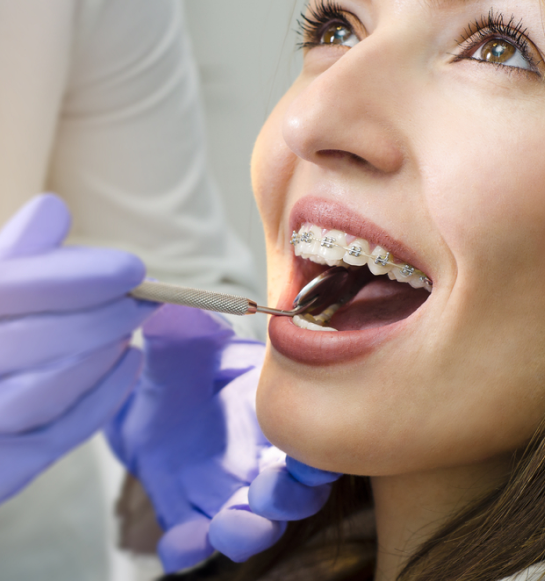
Braces treatment (fixed orthodontic therapy) is used in dentistry to correct misaligned teeth and jaws and improve both function and appearance.
What braces are
Braces are fixed appliances made of:
- Brackets (bonded to each tooth)
- Archwire (connects brackets and applies force)
- Ligatures (hold the wire in place)
- Sometimes elastics (rubber bands) for bite correction
How braces work
Braces apply continuous, gentle force to teeth, causing movement through a biological process called bone remodeling:
- Bone around the tooth breaks down (resorption) on one side
- New bone forms (deposition) on the other
- This allows teeth to shift gradually into proper alignment
Types of braces
- Metal braces
- Most common and effective
- Made of stainless steel
- Ceramic braces
- Tooth-colored, less visible
- Lingual braces
- Placed on the inner (tongue) side of teeth
- Self-ligating braces
- Use clips instead of elastics to hold the wire
Indications
Braces are used to treat:
- Crowding
- Spacing (gaps)
- Malocclusions (improper bite):
- Overbite
- Underbite
- Crossbite
- Open bite
Treatment process
- Consultation & diagnosis (X-rays, models, photos)
- Bonding of brackets
- Adjustment visits (every 4–6 weeks)
- Active treatment (usually 1–3 years)
- Retention phase (retainers to maintain results)
Advantages
- Works for simple to complex cases
- More precise control than aligners
- Doesn’t rely heavily on patient compliance
Disadvantages
- Visible (especially metal braces)
- Can cause discomfort after adjustments
- Requires strict oral hygiene
- Food restrictions (avoid sticky/hard foods)
Braces vs Aligners (quick idea)
- Braces: better for complex cases, fixed
- Aligners: removable, more aesthetic but limited in some movements